Hot flashes at night
Hot feet at night in menopause
Hot flashes can warm your feet: lab studies record blood flow and skin temperature rising in the hands, fingers and calves during a flash, even though most women feel the heat in the chest and face. Feet also warm up at bedtime as part of falling asleep. A burning that lingers, or comes with numbness or pins and needles, points to other causes the NHS lists, and those are worth a GP visit.
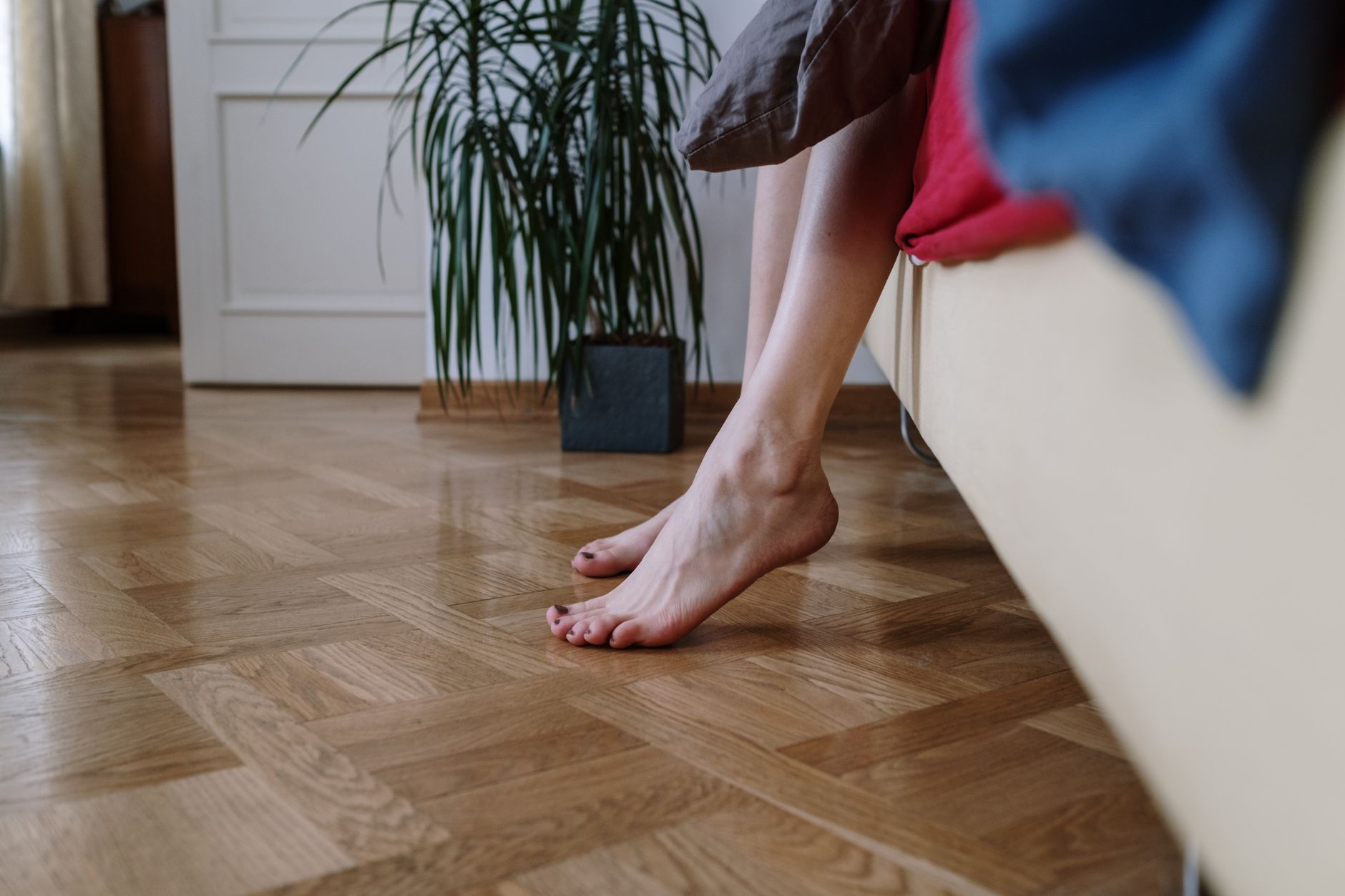
This page is for the woman who pushes her feet out from under the duvet at 2am, or gets up to stand on the cold bathroom floor, and wonders whether this is one more menopause symptom. Below is what the research measured, why feet run warm at night for everyone, what else makes soles burn, and the signs that mean an appointment. The hot flashes at night section covers the flashes themselves.
Can hot flashes reach your feet?
The NHS describes a hot flush as the face, neck and chest suddenly feeling very hot, sometimes with sweating, a racing heart or anxiety. Feet are not on that list, and most descriptions of a flash start in the upper body.
The laboratories tell a wider story. A 2010 study in the journal Menopause sums up earlier work that recorded brief rises in blood flow in the finger, hand, forearm and calf during a hot flash. It also cites an experiment in which finger temperature and blood flow rose during flashes even in a hand whose nerves had been numbed. In other words, a flash opens up the blood vessels in the skin well beyond the chest, and the limbs warm with it.
I found no study that measured the feet on their own during menopausal flashes, so the honest answer is that it is likely, from what happens in the hands and calves, and unproven for the soles. What the evidence does support is the pattern to look for. A flash comes as a wave lasting seconds to a few minutes, usually with heat in the chest or face and often sweat, then fades. Feet that burn for hours, or burn with no wave of heat above them, need another explanation.
Why feet run hot at night anyway
Warm feet at bedtime are part of how anyone falls asleep. A 2020 paper on skin temperature and sleep explains that the hands and feet are packed with small shunts between arteries and veins that can open to dump heat. Around 100 minutes before sleep the skin of the hands and feet starts to widen its blood vessels, the feet warm, and that lost heat lets the core temperature fall. The same paper notes that the heat loss carries on even when you are clothed and under covers, and that sleep tends to come sooner when the feet open up more.
So the feet are doing their job. The trouble starts when the heat cannot leave. A heavy duvet, a warm room and a flash on top of the normal evening warming can turn useful warmth into soles that feel as if they are glowing. That is why the bedroom is the first place to look, and why many women find that one foot outside the covers is enough.
Other causes of burning feet the NHS lists
Burning feet at night in menopause are not always about hormones. These are the causes that NHS pages name, with what sets each one apart.
- Nerve damage (peripheral neuropathy). The NHS neuropathy page lists numbness and tingling, burning, stabbing or shooting pain, and weakness, usually starting in the feet because the longest nerves are hit first. It estimates that almost 1 in 10 people aged 55 or over in the UK are affected.
- Diabetes. The same page names diabetes, type 1 or type 2, as the commonest cause of that nerve damage in the UK. Drinking too much alcohol, shingles, injury and some medicines are other causes it gives.
- Low vitamin B12. The NHS B12 page lists numbness, pins and needles and balance problems among the nerve symptoms, often with tiredness, a sore red tongue or memory trouble. It says a blood test usually finds it, and that damage left untreated can become permanent.
- Athlete's foot. This fungal infection causes sore, flaky, red or itchy skin and can spread to the soles. The NHS says it is more likely with wet or sweaty feet, which matters if night sweats leave your socks damp.
- Erythromelalgia. A rare condition, says the NHS, with burning pain, redness and hot skin mainly in the feet, in flare-ups lasting minutes to days. Warmth sets it off, and so can alcohol, spicy food, stress and tight shoes, a list that overlaps with common hot flash triggers.
Medicines appear twice in that list. If the burning started after a new prescription, raise it with your GP or pharmacist and keep taking the medicine until they have answered. Restless legs can also feel like burning or crawling at night, and our page on restless legs in menopause sets out how that differs.
Cooling hot feet in bed
The steps the NHS and the National Institute on Aging give for night flashes start with the room: a lower temperature, a fan, and bedding in light layers you can push off. For the feet in particular, a few changes follow from the sources above.
- Leave the end of the duvet loose, or use a lighter cover over the legs, so the evening heat from your feet has somewhere to go.
- Point the fan at the foot of the bed. The NHS erythromelalgia page suggests a fan or a cool, not cold, gel pack for a short time.
- Skip ice and cold water on hot feet. The same page warns that both can damage the skin.
- Dry between your toes after a night sweat or a shower, and wear clean cotton socks if you wear any, as the NHS advises against athlete's foot.
- Keep a note of alcohol and spicy food in the evening, since both appear among hot flash triggers and erythromelalgia triggers.
The bedroom checklist for hot nights turns the room advice into boxes to tick, and cooling a bedroom without air conditioning covers fans, windows and curtains in more detail.
When to see a GP about burning feet
The NHS neuropathy page says to see a GP for early signs, which it lists as pain, tingling or loss of feeling in the feet, loss of balance or weakness, and a cut or ulcer on the foot that is not healing. If you have diabetes, it recommends regular foot checks anyway. For athlete's foot, the NHS says to see a GP if pharmacy treatments have not worked, if the foot or leg becomes hot, painful and red, which could be a more serious infection, or if you have diabetes.
Burning that wakes you most nights, burning in both feet that is slowly creeping up the legs, and feet that look red and swollen during the heat are all reasons to book. A GP will ask about your symptoms and may arrange blood tests, which is how diabetes and low B12 are usually picked up. Treatment depends on the cause, and this site gives no advice on medicines or supplements.
A week of notes before the appointment
A few nights written down make the pattern clear in a way memory does not. For each night, note when the feet got hot, how long it lasted, whether a flash or sweat came with it, and whether you also had numbness or pins and needles. Add alcohol, spicy food and any new medicine. The printable night diary has columns for flashes, sweats and drinks, with room for a line about your feet, and the doctor questions builder helps you turn those notes into what to ask.
My take
I would start with the duvet and the fan for a week, because that costs nothing and tells you a lot. If the heat in your feet arrives with a wave of warmth across your chest and fades within minutes, it sits comfortably with hot flashes and the normal bedtime warming. If it lingers, burns without any flush, or comes with tingling, I would book the GP and ask about a blood sugar and B12 check before putting it down to menopause, since both are common in midlife and both are worth finding early.