A cooler bedroom
Cooling a bedroom without air conditioning
To cool a bedroom without air conditioning, keep windows, curtains and blinds shut through the day, open them once the air outside is cooler, and run a fan while the room stays under 35°C. For hot flashes and night sweats, add layered bedding you can push off, light nightwear, a small cold drink before bed and a dry top within reach.
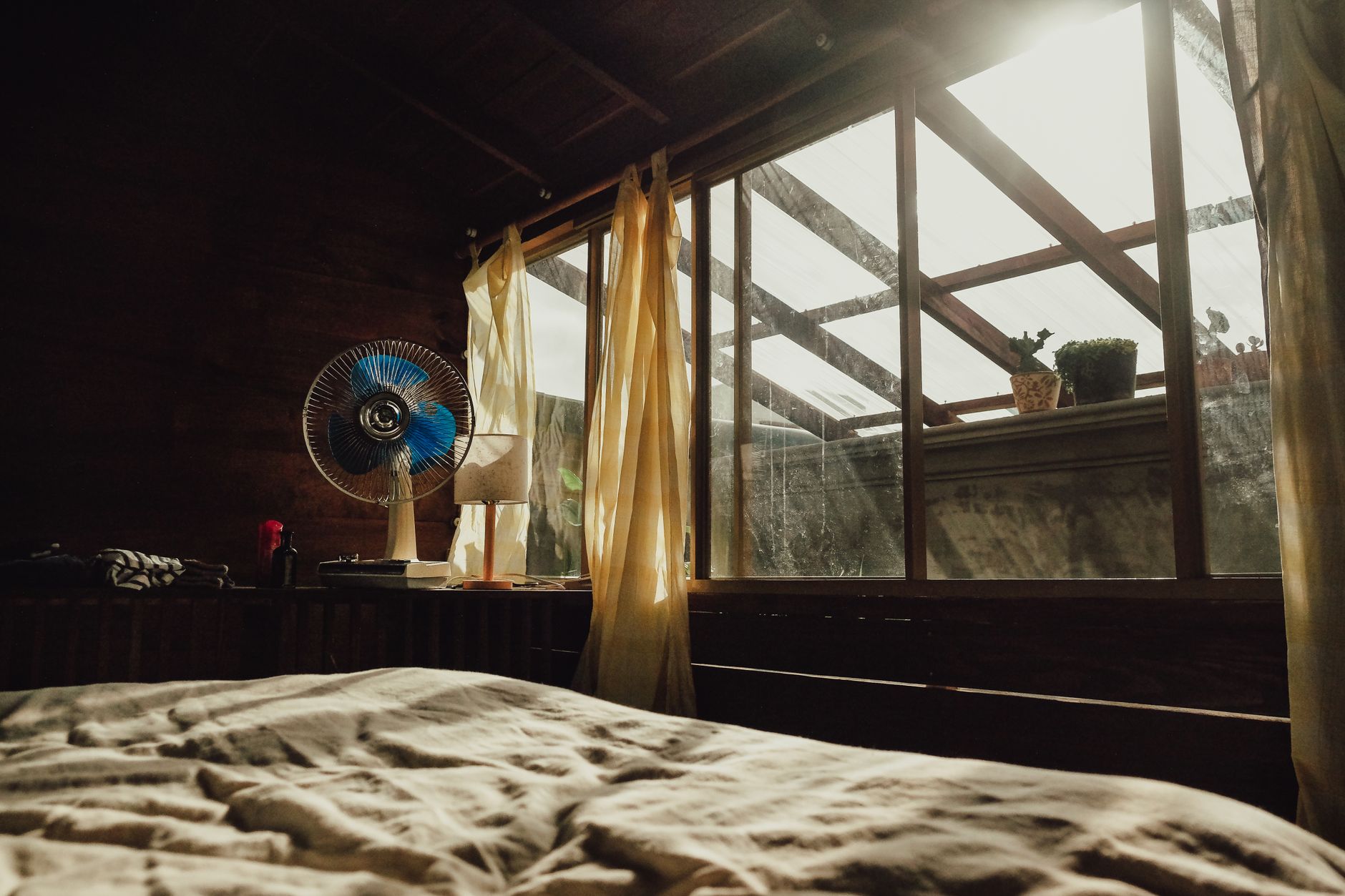
Most of this page comes from two public health sources: the NHS advice for heatwaves and the National Institute on Aging advice for hot flashes, with one sleep-science review explaining why a warm, damp night is so hard to sleep through. If you would rather work through it as a list, the bedroom checklist for hot nights has every step with a box to tick.
Keep the heat out during the day
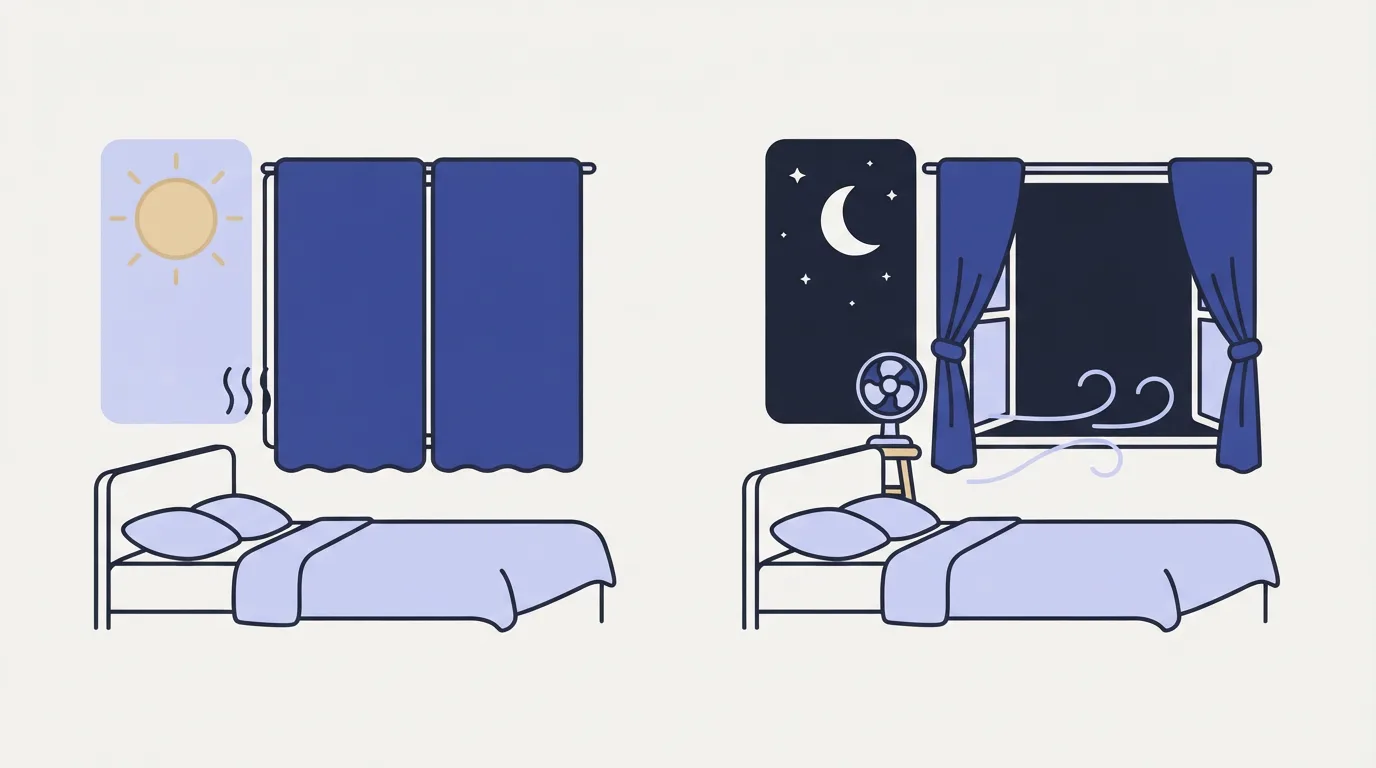
A bedroom that has soaked up sun all afternoon will still be warm at midnight, so the work starts in the morning. The NHS heatwave guidance says to close windows, curtains and blinds during the day. Glass lets sunlight in and traps its heat, and a drawn curtain stops much of that before it reaches the room. A south- or west-facing bedroom gets the worst of it in the afternoon, which is when keeping it shut pays off most.
Think about what else warms the room. A laptop charging on the bed, a television left on standby or a pile of warm laundry all add a little heat. Clothes drying on a rack add moisture too, and damp air makes a warm night harder to sleep through, for reasons the section on humid nights explains.
Let cooler air in at night
The second half of the NHS advice is to open windows at night once the temperature outside has gone down. Timing is what makes it work. Open too early and you let warm evening air in, so wait until stepping outside feels cooler than standing in the bedroom. If you can open windows on two sides of the home, air will move through on its own.
A fan helps that air reach you. The NHS says electric fans can help while the temperature is below 35°C. Above that, moving hot air over your skin does little, and on those nights a cool shower and a cool drink before bed do more. A fan set by the open window and angled across the bed draws the cooler air in; a fan on the bedside table pointing at your upper body works when the window cannot stay open.
Why humid nights feel worse
A review of sleep studies on heat and cold by Kazue Okamoto-Mizuno and Koh Mizuno explains what heat does once you are under the covers. With bedding and nightwear on, heat disturbs sleep more than cold does: you wake more often and get less deep sleep and less REM. Humid heat is worse again, because sweat cannot evaporate from damp skin, so it stops cooling you and simply leaves you wet.
Two other findings from the review are useful. Heat does most of its damage early in the night, when the body is trying to lower its core temperature to fall asleep. And in the studies it covers, sleep did not get used to the heat, even after five days in a row. Getting the room cool before you go to bed matters more than cooling it at 4am, and waiting for your body to adjust is not a plan.
How to keep cool at night in menopause
A hot flash brings its own heat, so a cool room will not stop one, though it gives your body somewhere to shed that heat. The National Institute on Aging lists the night-time steps for hot flashes: lower the bedroom temperature, drink small amounts of cold water before bed, layer your bedding so it can be adjusted through the night, and turn on a fan. The NHS menopause page adds a cool shower and suggests avoiding spicy food, caffeine, hot drinks, smoking and alcohol, which can all set off hot flushes.
Layered bedding is the step I would not skip. A flat sheet, a thin blanket and a light duvet on top let you peel back one layer at the start of a flash and pull it back when the chill follows, without fully waking. One thick duvet leaves two choices, sweating under it or throwing it off. The review above notes that sleepers naturally push covers off the neck, shoulders and upper arms first as a room warms, so a top sheet you can fold down to your chest often settles a flash on its own.
If you wake hot at the same hour most nights, the room may only be part of it. NIA says research now suggests that waking up may itself trigger the hot flash, which is covered in why you wake at 3am in menopause.
What to wear to bed with night sweats
The NHS suggests lightweight clothing for hot flushes and night sweats, and NIA suggests dressing in layers you can take off as a flash starts. Neither names a fabric. Shops sell plenty of "cooling" and "moisture-wicking" sleepwear, and the studies of sleepwear for hot flashes are small, so I would choose on feel: loose, thin, and easy to take off half asleep.
What does have support is staying dry. The Okamoto-Mizuno review notes that wet clothing holds less warmth and that drying off and changing clothes avoids a chill once the room cools later in the night. That cold, clammy feeling after a sweat is often what keeps women awake. A spare top and a small towel on the bedside table let you change in a minute without turning on the main light, and a folded towel under your shoulders saves stripping the whole bed. If you regularly soak through clothes and sheets, the night sweats section covers what the NHS means by night sweats and when they need a doctor.
Sharing a bed when one partner is too hot
One person flushing at 2am while the other wants the duvet up to their chin is a familiar standoff. The NHS and NIA pages do not cover it directly, so what follows is my judgement built on their advice about layers.
- Separate covers on one bed. Two single duvets, or a sheet for one of you and a duvet for the other, let each person set their own warmth. The NIA advice on layered bedding works far better when the layers are yours alone.
- The cooler side for the warmer sleeper. Give the side nearest the open window or the fan to whoever runs hot, and point the fan at that half of the bed.
- Different nightwear. The partner who feels the cold can add a layer far more easily than the hot one can take any more off.
- A plan for the worst nights. A spare room or sofa for a few weeks of bad sweats can protect both people's sleep, and agreeing to it in daylight takes the sting out of leaving at 3am.
A fan on one side and a hot-water bottle on the other is a reasonable compromise for couples who would rather not split the bed at all.
When a cooler room is not enough
Cooling the bedroom helps with the heat, yet some nights it leaves the sleep problem untouched. The NHS says to see a GP if night sweats happen regularly and wake you, or come with a fever, a cough or weight loss you cannot explain. The night sweats checker runs through those signs one at a time. If the heat is under control and you still lie awake, the NHS and NIA both point to cognitive behavioural therapy for sleep, and menopause insomnia and how long it lasts sets out what it involves. Treatment for hot flashes is a conversation for your doctor, and this site gives no advice on HRT, medicines or supplements.
My take
I would start with the free steps that change the room, because they take a day to set up and help both of you: curtains shut by mid-morning, windows open after dark, a fan by the window. Then fix the bed, since layered covers and a dry top by the pillow deal with the flash itself. Only after a couple of weeks of that would I spend money on special sheets or nightwear, and I would note each night in the printable night diary so you can see whether anything changed. Everything on this subject sits in the cooler bedroom section.