Insomnia and 3am waking
Sleep apnea in menopause: signs women miss
Obstructive sleep apnea, where the airway narrows and breathing stops and starts in sleep, becomes more common in women after menopause. Women tend to notice it as poor sleep, tiredness, morning headaches or low mood rather than the loud snoring and gasping people expect, so it is easy to put down to menopause itself.
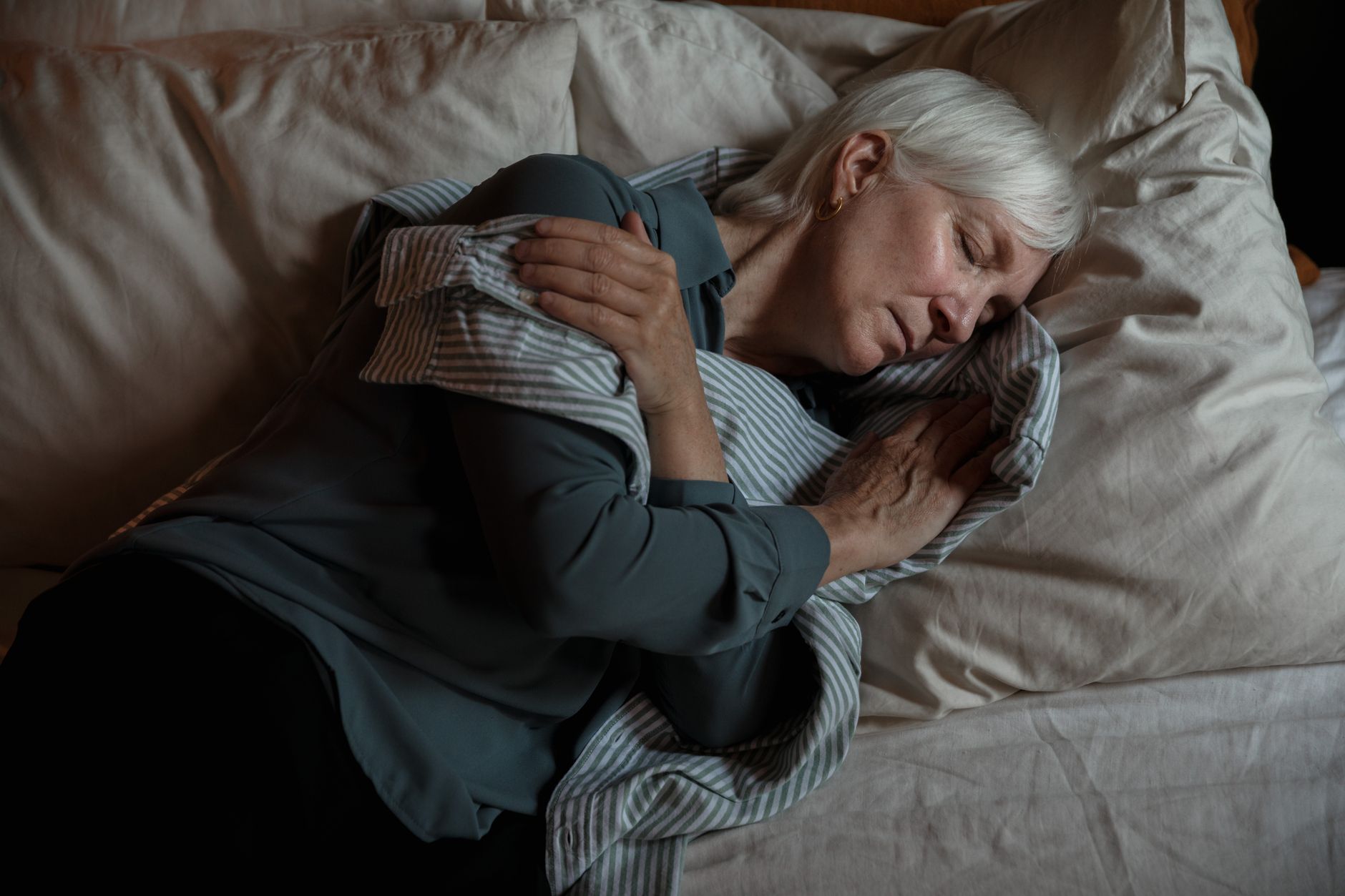
This page is for the woman who sleeps badly, wakes tired, and has been told (or has told herself) that it is just the change. Sometimes it is. Sometimes part of it is a breathing problem that has a test and a treatment. The broader overview of menopause sleep problems sorts the other usual causes, from night sweats to a full bladder.
Why apnea rises after menopause
The NHS describes sleep apnea as breathing that stops and starts during sleep because the airway becomes too narrow. It links it with weight, a large neck, getting older, alcohol, smoking, sleeping on your back and a family history. Several of those shift in midlife at the same time as hormones do.
Hormones seem to play their own part. A 2022 study in PLOS ONE of 774 women aged 40 to 67 started from the known fact that apnea is more common after menopause, and found that lower estrogen and progesterone levels went with more snoring and more apnea symptoms. That is an association in one group of women. It does not show that falling hormones cause apnea, and it says nothing about whether replacing them changes it.
Hot flashes come into it too. A Mayo Clinic team looked at 2,935 women and reported in Menopause in 2018 that those with severe or very severe hot flashes and night sweats had 1.87 times the odds of scoring as intermediate or high risk for apnea, after allowing for age, weight, smoking and blood pressure. The authors point out that the screening questionnaire they used, STOP-BANG, was built mostly from men and may overestimate risk in women. Read it as a reason to ask the question when night sweats are bad, rather than as a sign that every woman with them has apnea.
How it shows up in women
The picture most people carry is a heavy man snoring like a saw while his partner watches him stop breathing. Women often do not fit it. A Turkish clinic study published in Sleep and Breathing in 2017 compared 775 women and 2,052 men who were all diagnosed with apnea. The men more often had someone who had seen their breathing stop. The women more often reported:
- trouble getting to sleep or staying asleep
- tiredness through the day
- a headache on waking
- waking with a choking feeling
- low mood and poor memory
- needing to pee in the night, and reflux
The women in that study were also older on average, 56 against 50, which puts them squarely in the years after menopause. Their apnea was usually milder on the test and showed up more in dream (REM) sleep. The authors concluded that women present with their own set of symptoms and that questionnaires made for women are needed so the condition is not missed.
Signs that look like menopause
Put that list beside the menopause symptoms the NHS gives and the overlap is striking. Broken sleep, waking a lot, tiredness, poor concentration, mood swings and getting up to pee at night all appear on both. A woman of 52 who mentions them to her GP is likely to hear about hormones first.
A few details point more towards breathing than towards heat:
- Waking with a headache most mornings, which the NHS lists among the daytime signs of apnea.
- Feeling very tired every day even after a night you thought was unbroken. In a sleep-lab study of perimenopausal women covered in the 3am waking article, women recalled fewer wakings than the recordings showed.
- Waking with a gasp or a sense of choking, with no flush before or after.
- Night-time peeing that does not ease when you cut evening drinks. MedlinePlus lists apnea among the causes, and notes it may settle once the sleep problem is treated.
If you wake in the small hours, the article on waking at 3am in menopause explains why late-night sleep breaks so easily. Apnea is one more reason that sleep can break then: in the women of the 2017 study it was worse in REM sleep, and REM stretches grow longer towards morning.
Snoring after menopause
New snoring in your fifties is common and not always a problem. What matters is what comes with it. The NHS treats loud snoring as one sign among four that happen in sleep, the others being pauses in breathing, gasping or snorting or choking noises, and waking a lot. Snoring that a partner describes as stopping, then a silence, then a snort is the pattern to take seriously.
Since you cannot watch yourself sleep, the NHS suggests asking someone to stay with you and look for those signs. If you sleep alone, a phone left recording on the bedside table for a night or two will catch snoring and gasps, and you can play the clip to your GP. Bring the person who has heard you, too, if they are willing: the NHS says it can help to take them to the appointment.
When to see a GP
The NHS says to see a GP if your breathing stops and starts in sleep, if you make gasping, snorting or choking noises, or if you always feel very tired in the day. Any one is enough. Given how differently women present, I would add a run of morning headaches or insomnia that has not lifted with the usual habits.
The reason not to wait is what untreated apnea is linked with. The NHS lists high blood pressure, stroke, type 2 diabetes, heart disease, depression and accidents caused by tiredness, including at the wheel. Those risks also climb after menopause for other reasons, so it is a poor place to leave a question unanswered.
If your GP thinks apnea is possible, the usual next step is a referral to a sleep clinic. The NHS says most people do the test at home, wearing small devices overnight that record breathing and heartbeat. The result is an AHI score, the number of times breathing stops or drops per hour, graded as mild, moderate or severe. Treatment depends on the grade and is a conversation for that clinic, and this site gives no advice on it.
One caution sits on the same NHS page: sleeping pills can make apnea worse, so they should only be taken when a doctor recommends them. If you are asking for help with menopause insomnia, mention any snoring at the same appointment. The article on menopause insomnia and how long it lasts covers the rest of that conversation.
What to bring to the appointment
Apnea is hard to describe because the worst of it happens while you are unconscious. A couple of weeks of notes give a GP more than "I sleep badly". Write down when you went to bed and woke, how many times you woke, whether you were hot first, whether you woke with a headache, how sleepy you felt in the afternoon, and what anyone heard. Add alcohol in the evening, since the NHS links it to apnea and a pattern may show.
The printable night diary already has columns for wakings, sweats and drinks, and its notes line is the place for snoring and headaches. If your sweats are the bigger worry, the night sweats warning-signs checker sorts which signs need a GP soon.
My take
If you are past menopause, tired every day and putting it down to hormones, I would ask one question before accepting that: has anyone heard you sleep? Snoring with pauses, or a run of morning headaches, moves apnea up the list, and the home test is far simpler than most women expect. The one study tying apnea risk to severe night sweats used a questionnaire designed around men, so I would not read much into a high score on an online quiz either way. Bring the notes and let the sleep test settle it. More on broken nights sits in the insomnia and 3am waking section.