Insomnia and 3am waking
Anxiety at night in perimenopause
Anxiety often rises after dark in perimenopause because the night stacks its causes together: a hot flush can bring palpitations and a rush of fear, broken sleep leaves you more anxious, and lying awake in a quiet room gives worry room to grow. Slow breathing, a wind-down that keeps caffeine and alcohol well away from bedtime, and help for the insomnia itself all make a difference, and worry that lasts for weeks deserves a GP appointment of its own.
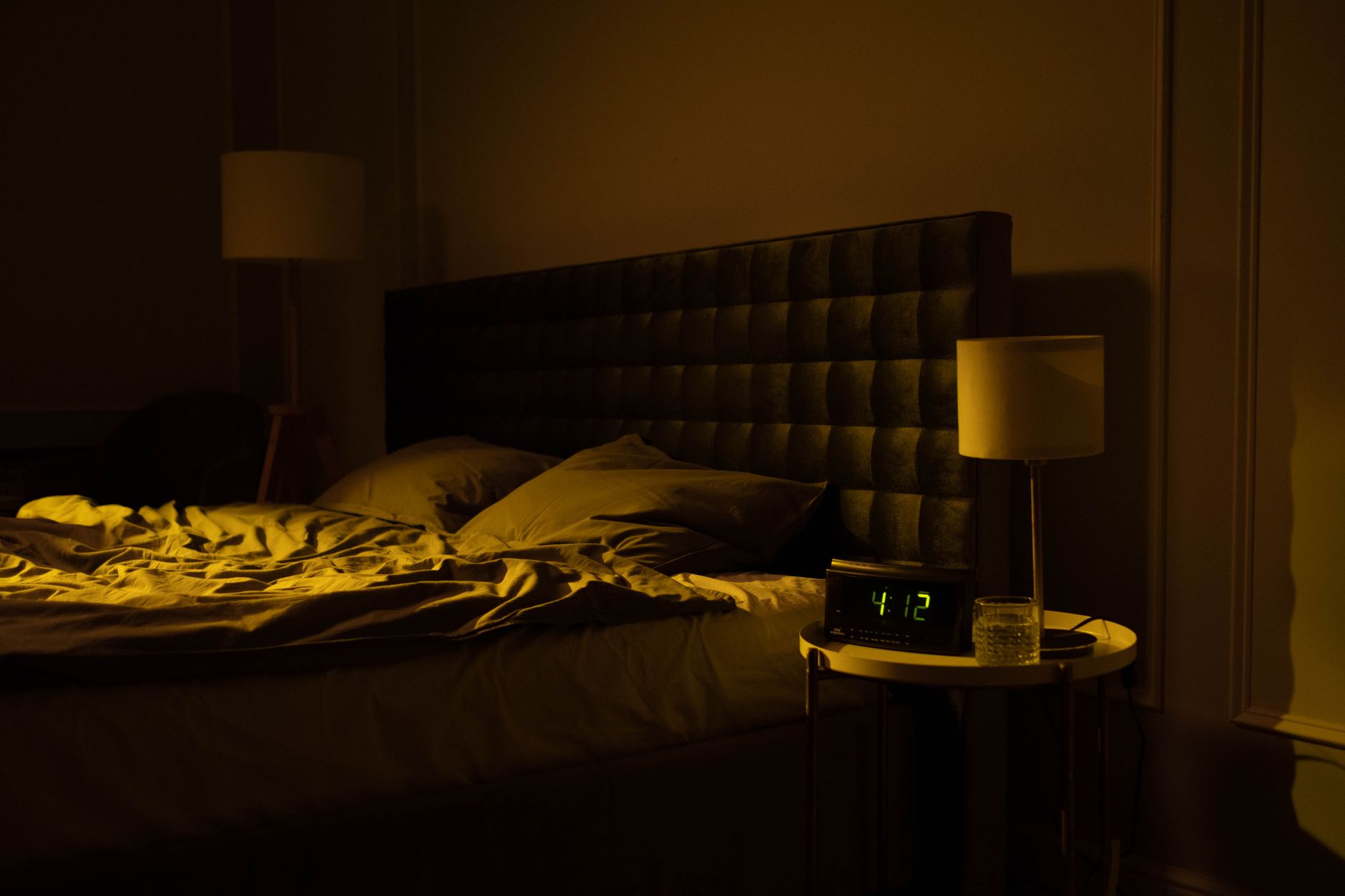
Many women in their forties describe the same thing: the day is manageable, then they wake at two or four with a racing heart and a head full of dread about work, money, children or their own health. This page looks at why perimenopause anxiety at night is so common, how it connects with hot flashes and low mood, and which steps have a source behind them. It gives no advice on medicines or hormones. That conversation belongs with your doctor.
Why perimenopause anxiety at night feels worse
Part of it is physical. The NHS symptoms page says a hot flush can make you sweat a lot, cause palpitations or anxiety, or make you feel dizzy, and that it can happen at night. Waking in the middle of one feels like waking into an alarm: heat, a thudding heart, a sense that something is wrong. It can feel as if the body produces the sensations of fear first, and the mind then goes looking for a reason.
The same NHS page says that not being able to get to sleep or stay asleep can make you feel irritable, stressed and anxious. The NHS mental health service, Every Mind Matters, describes the other direction: when you are stressed or anxious, your body feels more alert and your mind fills with worrying thoughts, which keeps sleep away. Both run at once in perimenopause.
Then there is the setting. In daylight a worry competes with phone calls, errands and other people. At 3am it has the whole room to itself, and a tired brain is poor at putting it in proportion. The article on waking at 3am covers why the early hours are when so many women surface in the first place.
Does anxiety bring on the hot flashes?
It may work both ways. Ellen Freeman's team at the University of Pennsylvania followed 436 women in the Penn Ovarian Aging Study and reported in the journal Menopause in 2005 that women with moderate anxiety were nearly three times as likely to report hot flashes as women in the normal range, and women with high anxiety nearly five times as likely. The link held after the researchers allowed for menopause stage, depressive symptoms, smoking, body weight, estradiol levels, race and age. Anxiety measured at one visit also came before the hot flashes reported later, which suggests it is more than a reaction to them.
That is an observational study, and it cannot prove that calming anxiety would cut the flashes. It does explain why the two so often arrive together, and why treating one as a side issue of the other leaves half the problem in place.
Low mood and sleep in perimenopause
Low mood follows a similar path. A 2018 review by Joyce Bromberger and C Neill Epperson, drawing on the SWAN and Penn studies, reports a 2 to 5-fold rise in the risk of major depression during perimenopause compared with the years just before it. The raised risk applies to a subset of women, and it appears to fall again two to four years after the final period, which the authors read as a sign that the transition, more than age, is behind it.
Sleep sits in the middle. The review notes that sleep difficulties are reported by about 50% of women in perimenopause against 30% before it, and that sleep and depression feed each other. In one study it cites, midlife women who reported sleep problems at the start were eight times more likely to have depression that persisted or came back over 13 years. In a clinical study, women whose sleep quality improved also saw their depressive symptoms improve.
The same review lists the things that raise the risk alongside the hormones: earlier depression, stressful life events, chronic pain, poor social support, inactivity and trait anxiety. Hot flashes went along with depressive symptoms in the studies but did not predict them, while recent adverse events did. If your low mood started in a year of bereavement or caring for a parent, that matters as much as your cycle.
The NHS adds a warning about timing: hot flushes and night sweats may improve after a while and be replaced by other symptoms such as low mood and anxiety. Feeling worse as the sweats fade does not mean something else has gone wrong.
What helps when you wake up anxious
The NHS calming breathing exercise can be done lying in bed. Let each breath go down into your belly without forcing it, in through the nose and out through the mouth, counting slowly to five on the way in and five on the way out if counting helps, for at least five minutes. It is the one thing on this list you can start at 3am. Its value grows if you also practise it in the day, so that it is familiar when you need it.
The NHS page on generalised anxiety sets out habits that ease anxiety over weeks:
- Talking to a friend, a relative or a counsellor about what is on your mind, before it surfaces at night.
- Regular exercise such as walking, swimming or yoga, which the NHS says can reduce anxiety and help sleep. The exercise before bed article looks at how late in the day is too late.
- Cutting back on coffee, tea, cola and energy drinks, whose caffeine can keep you awake and make anxiety harder to control. Every Mind Matters suggests no caffeine, alcohol or smoking in the 6 hours before bed.
- Not using alcohol to calm down. The NHS lists it among the things that worsen mental health, and Every Mind Matters says it leads to poorer sleep later in the night.
- Regular meals, to keep energy steady through the day.
If the worry has made the bed itself a place where you lie awake, it helps to go after the insomnia directly. Menopause insomnia describes CBT for insomnia, the approach with the strongest trial results in women who still have hot flashes, and how the habit of lying awake takes hold. Heat that wakes you can be reduced too, with a cooler bedroom.
Keeping a record of nights and moods
Anxiety bends memory. After a run of bad nights it is hard to say whether the fear came before the flush or after it, or whether the low days follow the broken nights. A few weeks of notes give you and your doctor something firmer than an impression.
The printable night diary has a row per night. Add a note of how anxious you felt on waking and how your mood was through the day, rated mild, moderate or severe. Mark the nights with a sweat or a flush, so you can see later whether the anxious mornings cluster after them or turn up on quiet nights too. That difference is useful to a doctor, because it points either towards the flushes or towards the worry as the place to start.
When to see a GP, and when to get help now
The NHS suggests seeing a GP if you think you may have an anxiety disorder. It is more likely when you feel anxious most of the time, the worry affects daily life and is hard to control, and it has gone on for six months or more. The NHS menopause page separately asks you to contact a GP about palpitations, which is worth doing if your heart races at night with no heat at all, so that other causes can be checked.
Low mood is a reason to go sooner. The depression criteria set out in the Bromberger review start at two weeks of feeling down, or of losing interest in things you used to enjoy, on most days. Tell the GP about the nights, the periods and the mood together. The NHS names talking therapy, usually CBT, as a main treatment for anxiety, and in England adults can refer themselves to NHS talking therapies without a GP. The doctor questions list builder helps you get the nights across in a short appointment.
If you feel unable to cope or keep yourself safe, do not wait for an appointment. In the UK, Samaritans answer on 116 123, and the NHS lists where to get urgent help. In the US, the 988 Lifeline takes calls, texts and chats at any hour, free and confidential.
My take
I'd think of night-time anxiety in perimenopause as three tangled threads: the flushes, the broken sleep and the worry. Pulling on any one of them loosens the others. I'd start with the breathing exercise during the day so it is ready at 3am, and no alcohol or late caffeine for a fortnight while you keep a diary. If the worry is still there most days after that, or the mood has gone flat, I'd book the GP and describe it as plainly as you would a night sweat. The insomnia and 3am waking section has the rest of what helps with the nights.